Sole Survivors: Winter Trainers That Can Take a British November

Photo by Photo by Jakob Cotton on Unsplash on Unsplash
November in the UK does not arrive with a dramatic snowfall. It arrives as a grey smear on the pavement, a bus floor that is somehow always wet, and a pub carpet that has seen things. That is the reality your trainers have to survive. Not a Alps expedition. Just a Tuesday in Manchester.
The good news is that winter trainers do not have to mean full technical hiking kit. You can keep the silhouette clean, the trousers wide and the layers heavy without sliding through the bus doors like a cartoon character. You just need to be honest about what a shoe is for. A suede runner from summer is not a winter shoe. A smooth cupsole with no tread is not a winter shoe. A trainer with grip, a sensible upper and a bit of proofing can be.
Start with the sole, not the logo
The first thing to check is the outsole. Flip the shoe over before you fall for the upper. Wet paving slabs, metal bus floors and polished pub tiles are the real test, and they punish smooth rubber. Look for a tread pattern with actual depth, not a decorative waffle that disappears after a month. A sticky rubber compound matters as much as lug shape. Some trail-inspired trainers feel aggressive on mud but brilliant on wet tarmac; others look rugged and skate across a station concourse like ice.
A good winter trainer has a sole that grips when you push off at a crossing. If the tread is shallow and the rubber feels hard, it is a dry-day shoe. That is fine. Just do not pretend otherwise when the forecast says drizzle from 7am until midnight.
The shortlist that survived the rotation
We are not going to crown one perfect shoe, because UK streetwear does not work like that. The right pair depends on whether you are walking to the train, standing at a bus stop or doing the pub-to-pub circuit. But a few categories kept proving themselves in the wet.
Gore-Tex trail runners are the obvious starting point. A Salomon XT-6 GTX or an Adidas Terrex with a proper membrane gives you water resistance and grip without looking like you are off to summit Snowdon. The trick is to keep the rest of the fit relaxed. Wide cargo trousers, a fleece and a beaten-up parka stop the shoe from looking like gym kit.
Leather cupsole trainers with a rubber rand are the quieter option. They handle a damp pavement better than mesh, wipe clean and look smarter with wool trousers or straight-leg denim. Just check the outsole. A leather upper is not a licence for a slippery sole.
Rubberised technical sneakers, the kind with sealed seams and a toe bumper, are the middle ground. Nike ACG and similar outdoor-leaning silhouettes work because they look at home with heavy layers. They are not invisible, but they are not loud either. In black, olive or grey, they slot into a winter rotation without fighting the rest of the outfit.
Puddles, bus queues and pub floors: the three tests
The puddle test is simple. Stand at the edge of a proper puddle, not a polite little puddle, and watch where the water goes. A good winter trainer keeps it out of the toe box. If your socks feel damp after one crossing, the upper is not doing its job. Mesh is brilliant in July and useless in November.
The bus queue test is about grip and warmth. You are standing still, shifting weight, stepping onto a wet floor. A shoe with a hard, slick sole will let you know. A shoe with a proper tread and a bit of insulation will not. This is also where bulky silhouettes earn their keep. They look right with wide trousers and they keep your feet away from the cold slab.
The pub floor test is the one nobody talks about. Spilled lager, wet coats, a floor that has been mopped with something that smells like lemon washing-up liquid. You want tread. You want a sole that does not turn into a skateboard. You also want a shoe you are not terrified to wear. Winter trainers should be worn, not preserved.
Proofing is a habit, not a one-off
A lot of trainers are described as water-resistant, which is not the same as waterproof. That is fine. Water-resistant plus a decent proofing spray is usually enough for a British city. Reapply every few weeks if you are wearing them daily. Clean the shoe first, let it dry naturally, then spray in a well-ventilated room. Do not go mad. A thin, even layer is better than a soaking.
Leather needs conditioner as well as protection. Gore-Tex and other membranes need the correct cleaner, not a random kitchen spray. Follow the label. If the shoe has a suede or nubuck upper, proofing helps but it does not make it invincible. Which brings us to the uncomfortable truth.
The suede delusion
Suede is not a winter shoe. It can be a winter-adjacent shoe if the weather is cold and dry and you are not walking through long wet grass. But daily November wear will mark it. Salt, grit, dirty puddle water and the general grey sludge of a UK pavement will find every suede panel. You can brush it, proof it and baby it, but you cannot change what it is.
If you love suede, keep a pair for dry cold days and pub floors that are not literally wet. For the proper wet days, choose leather, synthetic or a membrane. That is not a compromise. It is just dressing for the weather.
Cleaning off the grey
Do not put winter trainers in the washing machine and hope for the best. Brush off dry dirt first. Use a soft brush and a small amount of mild soap on the upper, then wipe with a damp cloth. Clean the outsole with an old toothbrush. Stuff the shoe with newspaper or kitchen roll and let it dry at room temperature, away from radiators. Direct heat warps glue and cracks leather.
Laces can be washed separately. If the shoe has a membrane, rinse it gently and let it air dry. Then re-proof when it is fully dry. A ten-minute clean every couple of weeks will keep a winter pair looking like a winter pair rather than a lost cause.
Fit notes for wide trousers and heavy layers
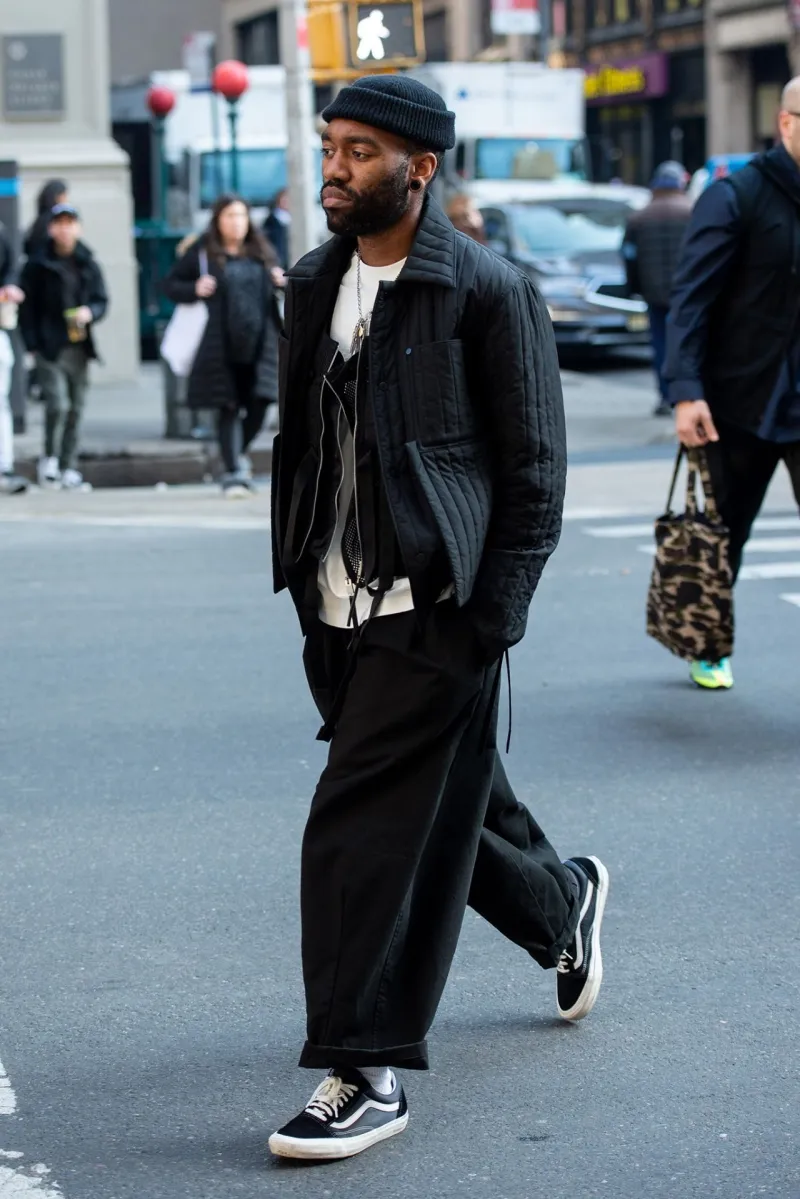
A winter trainer should have a bit of presence. A low-profile runner can disappear under a wide trouser and make the whole fit look top-heavy. A chunky sole balances a big coat and a relaxed leg. Colour is less important than condition. Black, grey, brown and olive are the easy options, but a scuffed white leather trainer can still work if it is clean and the rest of the fit is deliberate.
Socks matter more than people admit. A thick sock changes the fit of the shoe, so try trainers on with the socks you actually wear in winter. If you are between sizes, go with the one that gives you room to move. Cold feet are usually a circulation problem, not a shoe problem, but a tight shoe does not help.
The final rule is simple. Winter trainers are a tool and a style choice at the same time. Pick the grip, pick the upper, then make the silhouette work with the rest of your kit. Rotate two pairs if you can. Give them a clean. Proof them before the first proper downpour. And leave the suede at home when the pavement is shining.
That is how you get through a British November without ruined trainers, wet socks or a fit that looks like it gave up somewhere around the bus stop.