Paper Trails: The Café Noticeboard Is UK Streetwear’s Sharpest Drop Radar
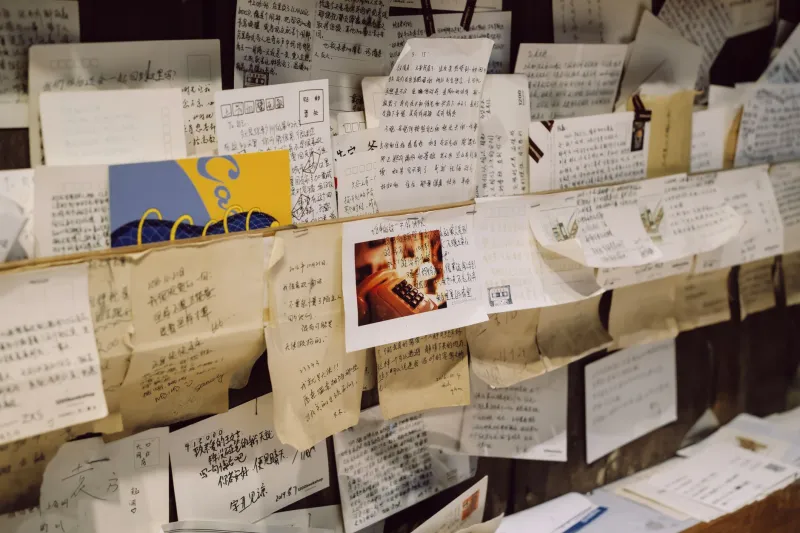
Walk through any UK city centre in 2026 and the loudest streetwear signal is rarely on a screen. It is a sheet of A5 card, slightly curled at the corner, Blu-Tacked to the window of a café that closes at four. The handwriting is rushed. The details are thin. And somehow it feels more urgent than any countdown timer.
This is the analogue drop scene: a loose network of café noticeboards, record-shop flyers, community-centre posters and handwritten notes that never make it to Instagram. It is not nostalgia. It is a working distribution system for small labels who want a real room, not a reply-guy audience.
The anti-algorithm drop
The past few years have made the feed feel like a shopping centre with the lights left on. Every launch has a teaser, a countdown, a comment-bait giveaway and a link that sells out before the page finishes loading. For a certain kind of UK label, that noise has stopped working.
A pinboard notice does something different. It filters for people who are already in the neighbourhood, already awake, already willing to walk. If you see the flyer, you were in the room. That is the whole marketing plan.
It also sets a pace. A café board cannot be refreshed every four minutes. It sits there until someone takes it down. That slowness suits labels making twenty tees, fifty caps or a run of screen-printed hoodies that will never restock. The board does the gatekeeping without a bot.
How to read the code
First, look at what is missing. A good notice is not a poster campaign. It gives you three things: a time window, a place you can picture, and a reason to turn up. “Sat 14th, 11–3, upstairs at the record shop, cash and cards, first come” is a complete sentence in this language. A QR code with no date is not.
Second, trust the board that looks messy. The best ones mix gym classes, lost cats, life-drawing nights, zine launches and the occasional sneaker swap. If every flyer is a drop, you are looking at a paid display, not a community board. The streetwear notice works because it is surrounded by normal life.
Third, read the hand. Marker colour, spelling, whether the label has bothered to write the postcode — these are clues. A handwritten notice with a local postcode and a phone number feels like an invitation. A printed A3 with a generic city centre address and a corporate logo feels like a trap.
And fourth, respect the small print. “One per person” means one per person. “No early queues” means the café has neighbours. “Cash only” means bring cash. The board is not just advertising; it is a set of house rules.
Where to look: Manchester and beyond
Manchester is the obvious starting point. The Northern Quarter has cafés near Oldham Street and Tib Street where the boards turn over weekly. Ancoats bakeries and coffee spots carry notices for studio sales and sample runs. Chorlton and Withington community centres still pin up local maker markets. Salford’s independent studios use nearby cafés as an extension of the front door.
The M10 postcode itself is part of the story. It is a name that sounds like a place, and the scene around it is postcode-first: small makers who know their first twenty customers by name and would rather pin a notice in a local café than pay for a promoted post. From M10 outwards, the logic travels.
Leeds has Hyde Park cafés and record shops with boards that lean towards DIY and football culture. Bristol’s Stokes Croft noticeboards are reliably chaotic and reliably useful. Glasgow’s Southside has community hubs where flyers for club nights sit next to drop notices. In London, Peckham and Dalston are obvious, but the better boards are often one street back from the main drag, in cafés that do not need a queue outside.
The rule is simple: follow the coffee, not the hype. If the café has a regular crowd and a board by the till, it is probably carrying something worth reading.
Etiquette and the long game
Buy something. Ask before you photograph the board. Do not strip it for souvenirs. If you turn up to a drop, buy a patch or a tee rather than just the free sticker. The whole system runs on small transactions and good manners.
For labels, a noticeboard drop is a test kitchen. It tells you who will walk in the rain, who brings a friend, who understands the price before they arrive. In 2026, that data is worth more than a thousand likes. It is also harder to fake.
So next time you are waiting for a flat white, read the wall. The next big find might not be in your feed. It might be pinned between a yoga class and a missing tabby, written in marker, waiting for someone to notice.