From Terrace to Transit: The Football Scarf's Quiet Streetwear Coup
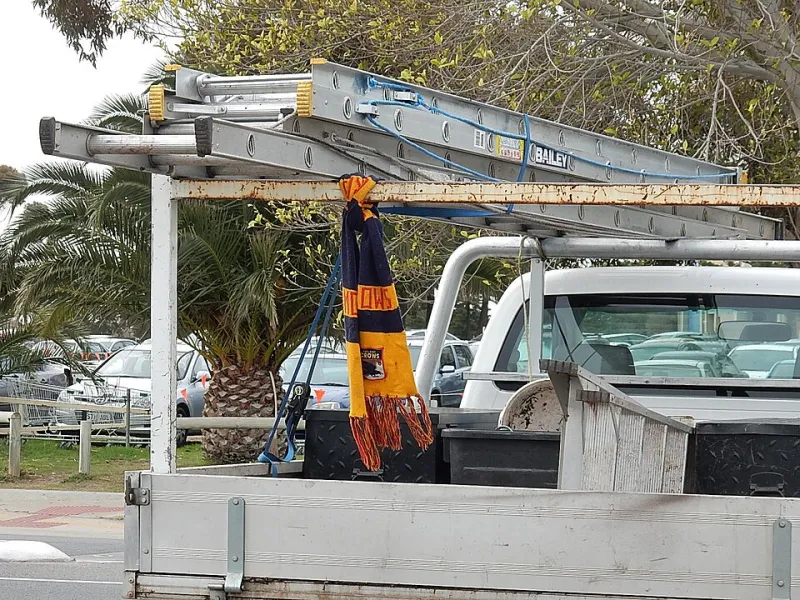
Photo: Michael Coghlan from Adelaide, Australia, CC BY-SA 2.0, via Wikimedia Commons
Football scarves used to live in one place: around the neck of someone walking to a ground. In 2026, they are everywhere else. On the bus. In the queue for a flat white. On the back of a chair in a Manchester pub. The terrace staple has become the streetwear accessory that finishes a fit better than another logo, and it has done it without losing the thing that made it matter in the first place.
How the Terrace Staple Left the Stand
The scarf has always been more than knitwear. In the 1970s and 1980s, it was a flag, a souvenir and a form of ID. Away days were trading posts. You swapped scarves, you collected them, you wore them with pride. Then the casual era turned the scarf into part of a uniform, and for a while it was tied to trouble as much as tribalism.
The revival has been slower and smarter. Vintage scarves started turning up in charity shops and car boot sales. Football culture became a reference point for designers who liked the colour, the typography and the history. By the mid-2020s, the scarf had crossed over. In 2026, it is less matchday gear and more everyday layer.
Club Colours, Neutral Knits and the Vintage Hunt
There are two lanes now. The first is club colours. A red and white Arsenal knit, a black and white Newcastle scarf, a green and white Celtic number. Worn with a neutral outfit, it is a hit of colour and a bit of heritage. Worn with too much club gear, it is a costume. The difference is restraint.
The second lane is neutral vintage. Faded navy, cream, burgundy, forest green. Scarves with no obvious club, or a club so obscure it becomes a conversation. These are the ones that work with everything. A cream scarf over a grey coat. A burgundy knit with black denim. A faded navy scarf with a waxed jacket.
The vintage hunt is part of the appeal. Charity shops, eBay, car boot sales, specialist archive accounts. The best scarves have a bit of wear. A loose thread. A faded label. They look like they have been somewhere. A brand-new scarf can look like merchandise. A vintage one looks like a story.
The 2026 Rework: Brands Doing It Properly
Brands have noticed. Terrace-inspired knits are back in 2026, but the good versions are not just club replicas. They are narrower, softer and easier to style. Fine-gauge wool instead of bulky acrylic. Longer fringes. Reversible designs. Muted palettes that work with a coat rather than against it.
Umbro and Adidas Originals have kept the terrace reference alive, while smaller UK labels are making one-off knits from deadstock wool. The best pieces sit between sport and style. They have the colours and the confidence of a football scarf, but the proportions of something you would wear to dinner.
That is the shift. The scarf is no longer a flag you carry. It is a layer you build with.
Three Ways to Wear It Without Looking Match-Bound
-
Over a tailored coat. A long wool coat, a neutral outfit, a club-colour scarf. The scarf adds warmth and a bit of edge. The coat keeps it from looking like you are on your way to the turnstiles.
-
Loose over a hoodie. Keep the hoodie plain. Let the scarf be the loudest thing. A vintage neutral scarf works best here. Knot it once, let the ends hang.
-
Folded narrow under a jacket collar. Think of it as a long scarf rather than a football scarf. Tuck the ends into a coat or a bomber. It looks intentional without shouting.
The rule is simple: one football reference at a time. If the scarf is club colours, keep the rest quiet. If the scarf is neutral, you can afford a terrace jacket or a retro trainer. Do not wear the full kit.
Why It Finishes a Fit Better Than Another Logo
A logo is static. A scarf moves. It adds texture, colour and a bit of personality. It also says something different. A logo says you bought the thing. A scarf says you know the culture. That is a more interesting signal in 2026, when everyone has access to everything.
The scarf also solves a practical problem. It is the easiest way to add colour without committing to a bright jacket or a loud trainer. It works in autumn, winter and a British summer that cannot make its mind up. It packs flat. It works over a coat, a hoodie or a knit. It is the last 10% of a fit, and the last 10% is often what makes it.
The UK-Wide Spread
The scarf travels well. In Manchester, it is red and black. In Liverpool, it is red. In Glasgow, it is green and white. In London, it is a mix of everything. But the neutral vintage scarf is the one that works in all of them. It does not need a fixture list. It just needs a good coat and a bit of confidence.
That is why the scarf has taken over. It is local and universal at the same time. It carries history without being stuck in it. And in 2026, that is exactly what UK streetwear wants: something with a story, worn in a new way.