Brick by Brick: The Railway Arch Studios Rewriting UK Streetwear's Independent Playbook
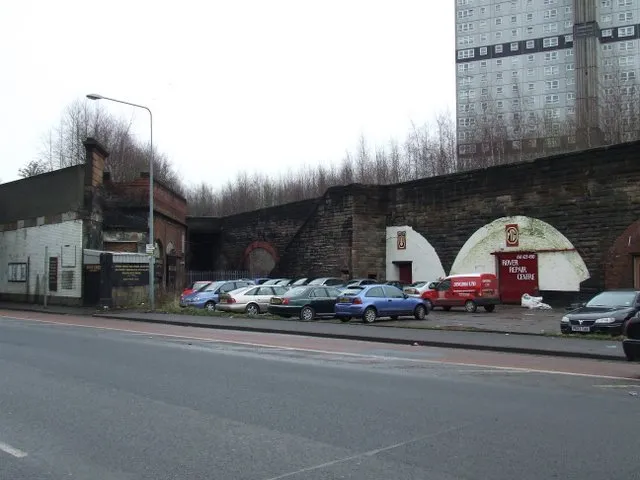
Photo: Thomas Nugent, CC BY-SA 2.0, via Wikimedia Commons
There's a particular sound to a railway arch studio: the low rumble of a train overhead, the clatter of a screen-print carousel, a kettle clicking off in the corner. It's not glamorous. It's not meant to be. But across Manchester, Leeds, Bristol and London, these brick-lined spaces are becoming the unlikely engine rooms of UK streetwear's independent streak in 2026.
Walk past a rolling shutter on a quiet industrial road and you might find a label cutting its first run of hoodies, shooting a lookbook against bare brick, or packing orders on a fold-out table. The arches have always been there — workshops, garages, storage — but right now they're doing something more specific. They're giving small streetwear brands the room to move without the overheads that would otherwise flatten them before they've even dropped.
Why the Arches Make Sense in 2026
The maths is simple. A retail unit on a busy high street is out of reach for most start-up labels. Even a shared studio in a trendy building can eat a whole drop's margin. Railway arches, by contrast, tend to sit just off the main drag: cheap-ish, functional, and forgiving of noise, paint fumes and the occasional late-night print run. They're not trying to be cool. That's exactly why they are.
There's also the aesthetic. Streetwear has always had a soft spot for the unpolished — the warehouse, the car park, the underpass. Shooting a lookbook in an arch gives you texture for free: concrete floors, steel beams, shutter doors, that strip of daylight through the front. It reads as real because it is real. No studio hire, no white cyclorama, no pretending.
And in a year when so much of the market feels polished to the point of blandness, the arch scene offers something else: proof that the gear is being made by people who are actually in it. You can walk in, see the screens, smell the ink, talk to the person who cut the pattern. That's a different kind of retail experience — and for a certain kind of shopper, it's the whole point.
From Manchester to London: A Loose Network
You can trace a line between these spaces. Manchester's arches near Piccadilly have long housed creatives, and the current crop leans into print and cut-and-sew. Leeds has its own pockets of railway-side units where labels share equipment and split shipping costs. Bristol's arch scene sits close to the city's long-standing DIY music and graffiti culture — screen-printing and small-batch tees feel like a natural extension. And in London, the arches of Hackney, Peckham and Bermondsey continue to host a rotating cast of streetwear start-ups, some lasting a season, others growing into proper operations.
What connects them isn't a single scene or city. It's a way of working: shared knowledge, borrowed gear, a willingness to help a mate finish a drop. Labels in different cities trade tips on suppliers, photographers, even lease negotiations. It's less a formal network than a group chat that happens to span the country. But it's real, and it's quietly making the UK streetwear map more interesting than a list of postcodes.
Small Batches, Big Statements
The arch model suits small runs. A label can print 50 tees, see what lands, then print 50 more. No warehouse full of unsold stock, no pressure to chase trends they don't believe in. That agility is a big part of why these brands feel different. They can take a risk on a weird graphic or an unusual cut because the downside is limited.
It also means the product is often made closer to home. Not everything, obviously — blanks are still blanks — but the printing, the embroidery, the finishing, the photography: much of that happens on site. For shoppers tired of the same high-street cycle of drop, discount, repeat, that matters. You're not just buying a logo. You're buying something that passed through a few pairs of hands in a railway arch, and you can often see exactly whose.
What It Means for Shoppers
If you're chasing something beyond the usual cycle, the arch scene is worth paying attention to. Many of these labels sell through their own sites or at occasional open-studio events, and a few are starting to pop up at small-scale markets and sample sales. The vibe is low-key: no queue culture, no hypebeast theatre, just good gear and a chat.
It also rewards a bit of curiosity. Follow the labels, not just the retailers. Look for the ones shooting in their own workspace, tagging their printers, showing the mess as well as the finished product. That's usually a sign they're actually making something rather than white-labeling it and calling it a day.
The Catch
None of this is easy. Arches can be damp, noisy and awkward to heat. Leases can be short. A train rumbling overhead every ten minutes isn't ideal for filming sound. And for every label that grows out of an arch into something bigger, there are others that quietly pack up when the rent goes up or life gets in the way.
But that's part of the texture too. The arch scene isn't a guarantee of success. It's a space to try. And in a UK streetwear landscape that can feel increasingly corporate, that's worth something.
The Next Wave
In 2026, the most interesting stuff isn't always happening in the obvious places. It's happening under the brickwork, behind the shutters, next to the train line. The labels building there now might not be on your radar yet. But give it a season or two — you'll probably be wearing something they made.